
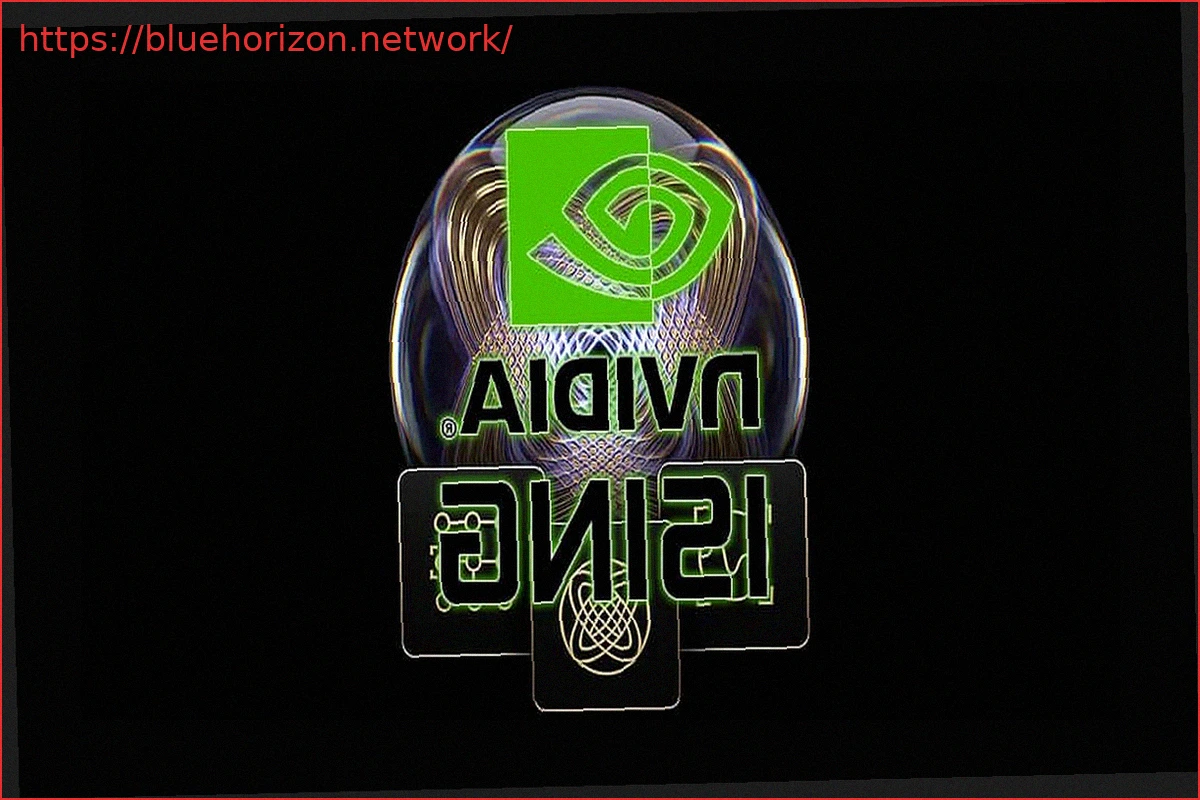
NVIDIA has unveiled Ising, an open family of AI models aimed at two critical areas in quantum computing: processor calibration and error correction. This development addresses significant challenges in the field, enhancing performance and stability.
Contrary to expectations of a “quantum GPU,” Ising is a software layer integrated into NVIDIA’s GPU-accelerated quantum platform. The company provides this framework with open models, weights, tools, data, and fine-tuning guides, positioning it as a potential market disruptor.
NVIDIA Ising: AI for Quantum Computers Promises New Performance Levels
Ising tackles the inherent instability of qubits, whose behavior fluctuates over time, necessitating constant measurement, adjustment, and correction. To address this challenge, NVIDIA has divided Ising into two components: Ising Calibration and Ising Decoding. Ising Calibration focuses on fine-tuning quantum hardware, while Ising Decoding aims to accelerate error correction during ongoing system operations.
NVIDIA highlights the current state of quantum processors, which experience approximately one error per 1,000 operations. To achieve truly useful quantum systems, this rate needs to be reduced to one error per 1 trillion operations. Ising Calibration, an open VLM (Vision-Language Model) with 35 billion parameters, is trained on data from various qubit modalities to meet this goal.
NVIDIA demonstrates that Ising Calibration analyzes experimental hardware results to generate technical outputs for calibration tasks, aiming to dramatically reduce error rates, a feat previously considered in the realm of science fiction.
QCalEval: Quantum Computers Now Have Precision Benchmarks
NVIDIA has also introduced QCalEval, a six-part benchmark built on real-world quantum computer results. The company claims that Ising outperforms GPT 5.4 by 14.5% in this benchmark, a significant achievement.
The second component, Ising Decoding, utilizes two open 3D CNN models designed for pre-decoding in quantum error correction, rather than a large language model. NVIDIA reports performance improvements of up to 2.5 times in speed and up to 3 times in accuracy, depending on the scenario.
The objective is to reduce the latency of classical systems responsible for processing quantum processor measurements, which is crucial for real-time corrections. Improving precision is essential, but achieving it quickly is an equally fundamental part of the equation.
Ising is integrated into NVIDIA’s broader GPU quantum computing ecosystem. Ising Calibration can run on platforms like Grace Blackwell, Vera Rubin, and DGX Spark, while the open Ising stack leverages resources available through Hugging Face, GitHub, CUDA-Q QEC, cuQuantum, and PyTorch.
NVIDIA presents Ising as an open foundation for laboratories and companies to adapt these models to their specific data, qubits, and workflows. With Ising, NVIDIA has made a significant impact on quantum computing, bringing what once seemed impossible closer to reality through AI and accelerating the democratization of quantum technology.