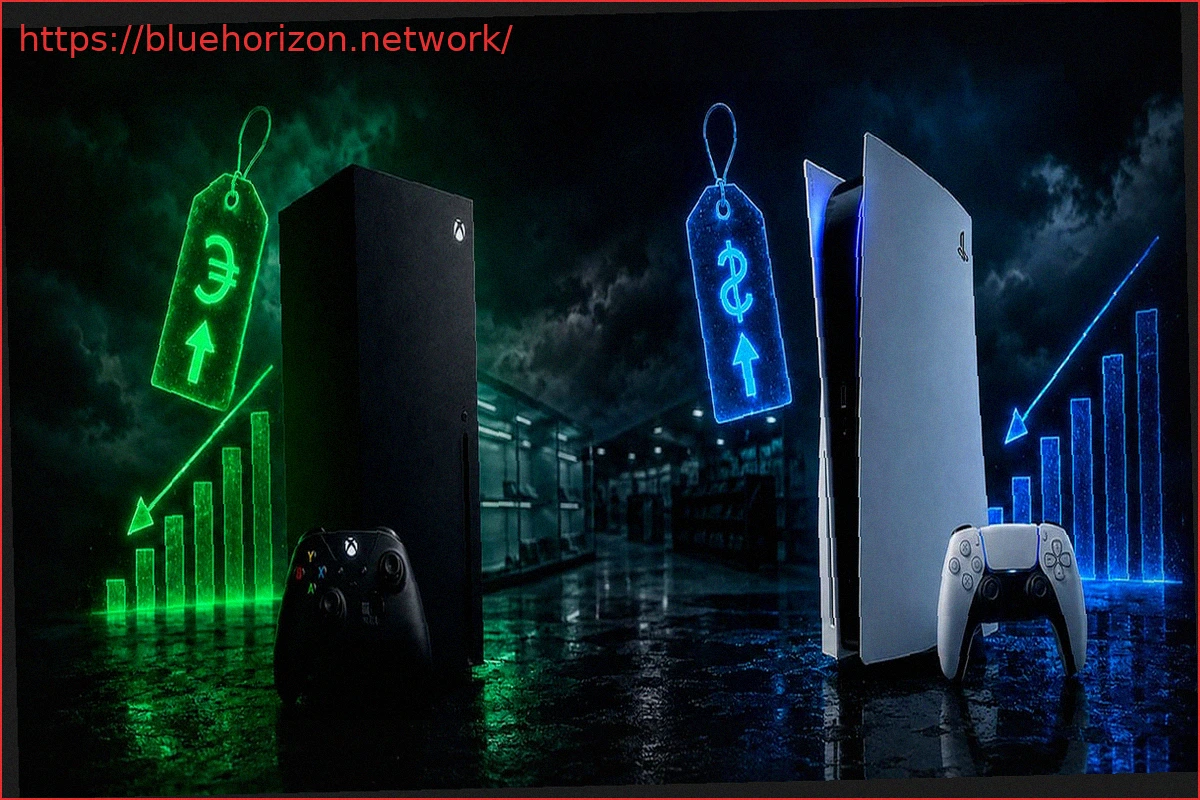
Console price increases are not yielding the expected sales results for PlayStation, and even less so for Xbox. The U.S. console market is sending a clear message: price hikes are starting to take their toll. According to data from market researcher Circana for May 2026, PlayStation hardware sales fell to their lowest level for a May month since the year 2000. Meanwhile, Xbox recorded its worst May ever in terms of consoles sold. This is particularly striking as it’s not an isolated dip for a specific console but rather a general weakening of traditional hardware during a mature generation phase.
In PlayStation’s case, the decline was particularly aggressive. PlayStation 5 unit sales dropped by 58% compared to May 2025, while PS5 hardware spending decreased by 43%. This means PlayStation sold significantly fewer consoles, and despite higher prices, this increase was insufficient to offset the volume slump. Circana attributes this downturn to recent price increases implemented by Sony, which took effect on April 2, 2026. In the U.S., the PS5 Digital Edition rose to $599.99, the PS5 to $649.99, and the PS5 Pro to $899.99. In Europe, following the price hike, these consoles are sold for €599.99, €649.99, and €899.99 respectively.
PlayStation is Greatly Affected in Sales, While Xbox, Curiously, Has Not Fared as Poorly
Regarding Xbox Series X|S console sales, they fell 12% year-over-year, enough to mark the worst May on record for Xbox in the U.S.. However, Xbox hardware spending increased by 7%, meaning Microsoft earned more money from hardware despite selling fewer consoles. The explanation lies in the average price. In other words, Xbox sold fewer consoles, but each console sold did so at a higher price. The key metric here is precisely the average price.
In May 2026, the average price paid for a new video game hardware unit in the U.S. reached $502, a 14% increase from $440 in May 2025. The rise was even more pronounced for PlayStation 5, whose average price increased by 33% to $672. For Xbox Series, the average price rose 22%, to $524. This indicates that the hardware industry is generating more revenue per console sold but at the cost of losing a significant number of new players who cannot afford the new prices.
It’s worth noting that Microsoft announced another price increase for its Xbox consoles this week. Starting August 1, 2026, all Xbox consoles with 512GB SSDs will see their price increase by $100. Models with 1TB SSDs will increase by $150 for 1TB models. Furthermore, the special edition Xbox Series X with a 2TB SSD capacity has been discontinued. Microsoft defended this measure as being linked to the rising costs of RAM and SSD storage, components that are already 2.5 times more expensive and could double in price again by the fall of 2027.
The U.S. Hardware Market Grew Thanks to Nintendo Switch 2 Sales
Despite the sales collapse of PlayStation and Xbox in the United States, Mat Piscatella of Circana revealed that U.S. hardware spending grew by 38% year-over-year in May 2026. In May, console sales generated $249 million, and this was thanks to the Nintendo Switch 2 compensating for the 43% drop in PS5 spending and the 58% unit slump for PS5. While Xbox sold fewer units, it contributed positively to the industry’s figures.
There’s another significant point: the Nintendo Switch 2 was the best-selling console of May in the U.S., and it also leads the year-to-date figures for 2026. In its first 12 months on the U.S. market, it has already sold 5.9 million units, making it the second fastest-selling video game hardware in U.S. recorded history, just behind the Game Boy Advance, which accumulated 6.5 million in the same period.
The surge in Switch 2 sales also follows the company’s announcement in early May of a price increase for its console in September, prompting many users to advance their purchases.