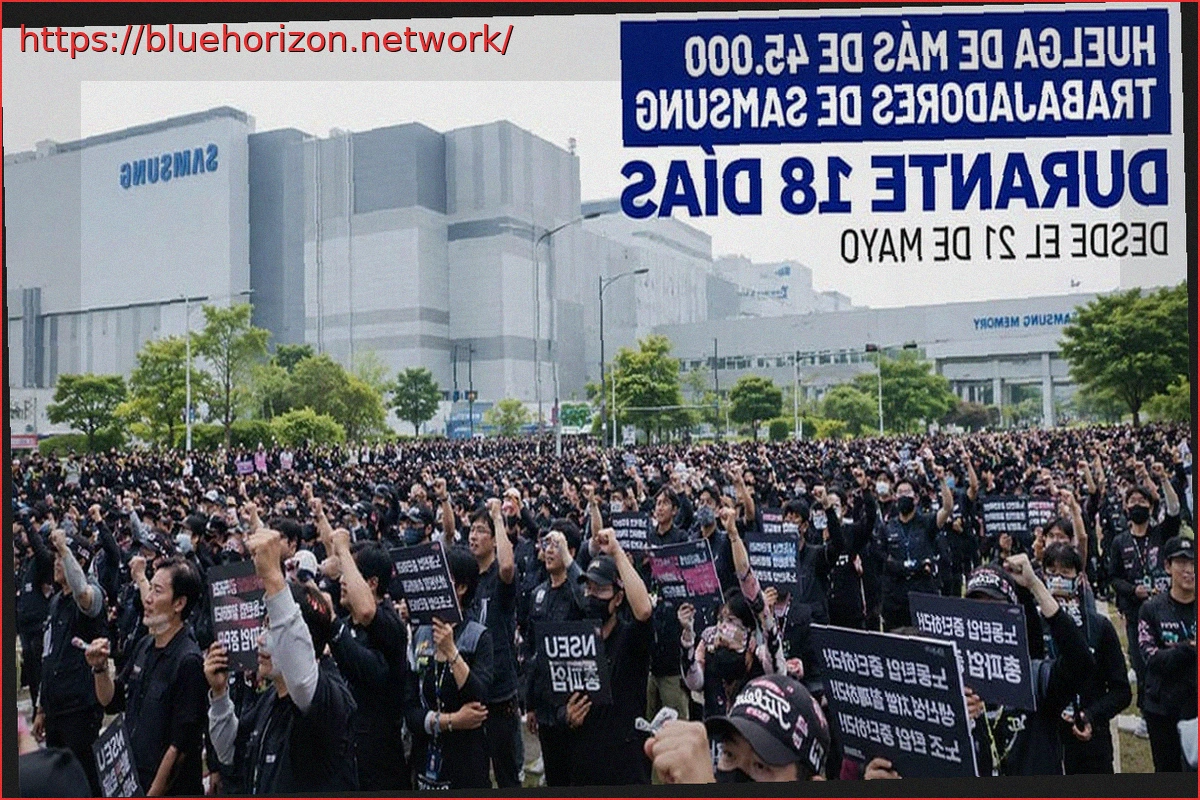
A significant event in the hardware sector, particularly for RAM memory, was the impending strike by Samsung workers. Approximately 50,000 employees were set to strike against the company for not receiving anticipated bonuses following Samsung’s substantial profits. Concerns were also raised about the company prioritizing compensation for employees in the memory sector over those in chip production.
Although the strike was scheduled to commence today, May 21st, and last for 18 days, it has now been confirmed that Samsung has conceded and is willing to allocate up to 12% of its annual operating profits as bonuses for its workers.
The memory RAM market experienced a significant price surge in November 2025. Contrary to expectations that prices would normalize and conditions would improve in 2026, the reality has been different. This year has seen even greater demand driven by Artificial Intelligence (AI) due to substantial investments in the sector. Companies are investing billions of dollars in hardware for AI training and inference. Furthermore, AI agents, valued for their automation capabilities, have gained popularity this year.
Samsung Signs Agreement and Halts Strike Hours Before It Begins: Will Use a Portion of Profits for Worker Bonuses
Memory manufacturers have achieved record revenues as companies purchase massive quantities of DRAM and NAND Flash for their data centers. Samsung has been the biggest earner among them, and issues arose when the company published its financial results earlier this year. Workers felt that the company’s considerable profits were not adequately reflected in their salaries. While they did receive a single bonus in 2026, it was deemed insufficient. Just before the mass strike was set to begin, Samsung signed a preliminary agreement with the union, ensuring workers will receive increased bonuses.
Under this agreement, Samsung pledges to implement a performance-based bonus system that will reward employees according to profitability. This system will be in effect for 10 years and aims to distribute $133 billion between 2026 and 2028, and $67 billion between 2029 and 2035. Samsung will reportedly allocate the equivalent of 12% of its profits as bonuses, aligning with JPMorgan’s estimates. However, other media reports indicate payments representing 11.5% and some suggest 10.5%, with the latter being closest to Samsung’s initial promise.
Agreement Still Falls Short of the Union’s 15% Annual Operating Profit Demand for Workers
The preliminary agreement signed marks a significant step forward for the workers and will lead to improved salaries. However, when compared to the union’s initial demands, it falls short. The union had been pushing for Samsung to allocate 15% of its annual profits to workers, and the company’s offer is lower. In comparison, SK Hynix, another major memory manufacturer, allocates 10% of its annual operating profits as performance bonuses.
The issue is that SK Hynix employees are set to receive over 700 million won if the company achieves its annual profit target of 250 billion won this year. For Samsung, workers might not reach this figure unless their base salary is significantly higher.
Additionally, the special bonuses, representing 10.5%, will not be paid in cash but in stocks, with certain conditions attached. Workers will only be able to sell one-third of these shares immediately, with the remainder needing to be held. This is not entirely negative, considering that this 10.5% is without payment limits, although it depends on the company meeting its objectives. Finally, Samsung has agreed to a 6.2% salary increase this year, along with improvements in housing loans and child support.