

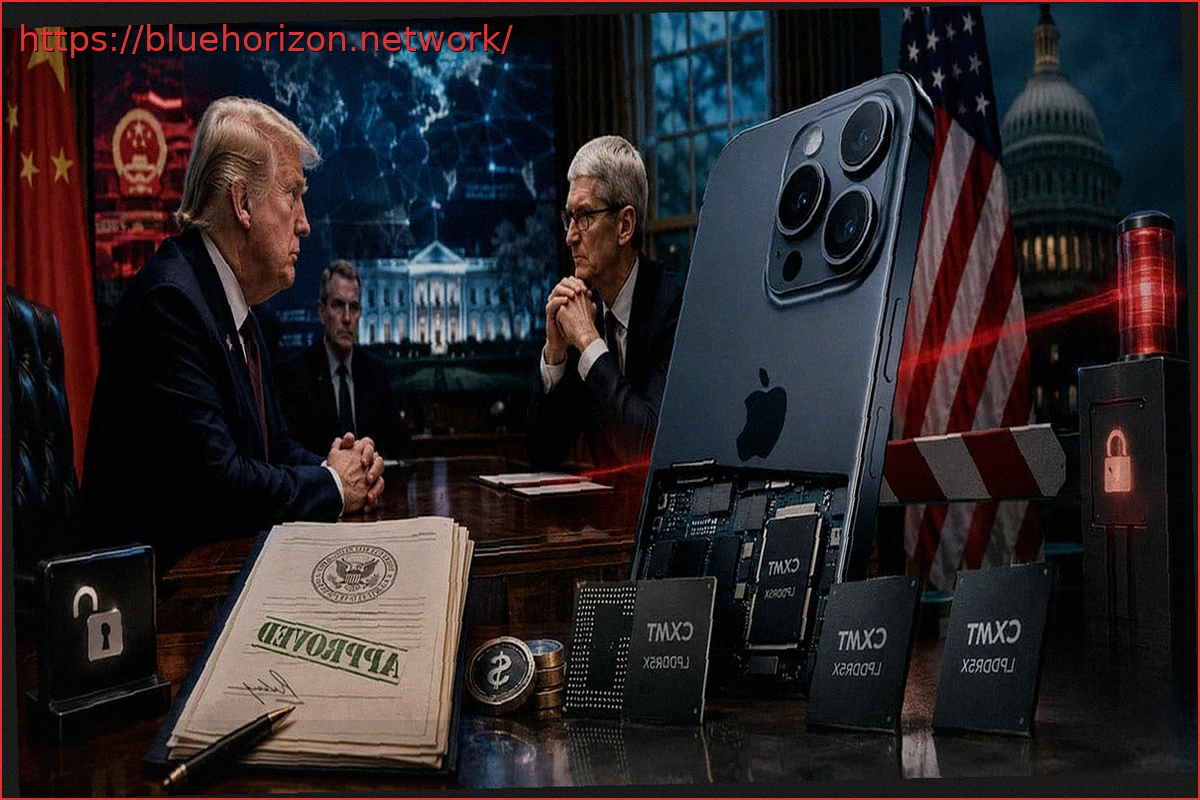
Apple is reportedly in talks with Washington, seeking approval to source DRAM chips from Chinese manufacturer ChangXin Memory Technologies (CXMT). This strategic move is intended to alleviate the impact of a global memory shortage and avert a potential price surge for their flagship device, the iPhone 18 Pro.
The tech giant is not merely looking for an alternative supplier but rather a critical pathway to offset a significant escalation in memory and storage costs. Following recent price increases on its Mac, MacBook, iPad, and Vision Pro devices, Apple is keen to protect its most popular product line, the iPhone. By securing DRAM from CXMT, Apple aims to prevent the iPhone 18 Pro from becoming more expensive, especially as memory availability becomes increasingly constrained.
iPhone 18 Pro Faces Challenges Due to 12GB RAM Requirement
The cost of electronic devices directly correlates with their RAM and storage capacity. The iPhone 18 Pro is expected to feature 12GB of LPDDR5X RAM. Previously priced at $39, the cost of 12GB of RAM has now risen to $145. Similarly, the price for 256GB of NAND storage has jumped from $13 to $51. This represents a substantial increase of approximately 272% for RAM and 292% for NAND. Consequently, memory and storage, which accounted for nearly 9% of the hardware cost for a 256GB iPhone 17 Pro, are projected to constitute around 27% of the hardware cost for the upcoming iPhone 18 Pro.
This situation presents Apple with a stark choice: either absorb a considerable reduction in profit margins or pass on the increased costs to consumers. The latter option is proving to be increasingly risky. Following the announcement of recent price hikes, the company’s stock experienced a nearly 6% decline. This downturn highlighted Apple’s vulnerability to the current market conditions, mirroring the challenges faced by the entire industry. Furthermore, increasing prices could lead to decreased sales, as evidenced by the price increase of their popular MacBook Neo from 699 euros to 799 euros.
Industry analysis suggests that to maintain its profit margins, Apple might need to increase the price of the iPhone 18 Pro by approximately $270. This could lead to a starting price of $1,399 for the iPhone 18 Pro and $1,499 for the iPhone 18 Pro Max, translating to roughly 1,500 euros and 1,700 euros in Europe. This is precisely the scenario CXMT’s involvement could help Apple avoid.
Apple Relies on China and CXMT’s Services to Safeguard Smartphone Business
Engaging with Chinese manufacturer CXMT offers Apple a dual advantage. Firstly, it provides access to an additional source of DRAM amidst a global shortage. Secondly, it strengthens Apple’s negotiating position with its three primary traditional suppliers: Samsung, SK hynix, and Micron. By securing a deal with CXMT, Apple could leverage this to negotiate better terms, potentially leading to price reductions or increased supply from the market leaders. This is particularly relevant as CXMT plans to scale its monthly wafer production from 200,000 to 300,000 by the end of the year.
However, challenges remain. CXMT has been designated by the U.S. Department of Defense as a Chinese military company and is reportedly considered for inclusion on the Department of Commerce’s Entity List. While Apple might not be legally prohibited from purchasing CXMT chips at present, doing so could incur significant reputational damage and become problematic if Washington imposes further restrictions. Moreover, explicit approval from the White House could invite political criticism, particularly from those who believe allowing Apple to procure Chinese memory would undermine U.S. efforts to reduce reliance on China for critical supply chains.
Additionally, if the Trump administration grants Apple’s request for an exception, it could pave the way for other tech companies to seek similar exemptions. If CXMT successfully re-enters Apple’s supply chain, its NAND flash counterpart, YMTC, might pursue a comparable path. This would signify a partial re-integration of Chinese suppliers into Apple’s logistics network, a development that Washington has been closely monitoring for years.