
The prospect of purchasing a mid-range, high-end, or premium graphics card is changing. The issue extends beyond the GPU itself to the entire product package. The RX 9070 XT serves as a prime example, based on recent research from Igor’s LAB. While it can currently be found for around €660-€670 in Germany, this price likely reflects older stock. New shipments manufactured with current Bill of Materials (BOM) costs are expected to be significantly higher. Manufacturers are likely absorbing these cost increases for now, but this situation is unsustainable and we may be on the brink of a price disruption.
As you might expect, the core of this issue lies in the BOM, or Bill of Materials. This represents the cost of the raw materials for the graphics card before factoring in final manufacturing, testing, logistics, distribution, commercial margins, and taxes. The current state of the industry is critical.
Graphics Cards Will Increase in Price Sooner Rather Than Later; RX 9070 XT Could Cost Up to €200 More Due to Higher BOM
Igor’s research focuses on a specific model lauded for its performance per FPS, especially with FSR 4.1 – the well-known RX 9070 XT. For this model, equipped with 16 GB of GDDR6 memory, the Navi 48 graphics chip’s cost has reportedly risen from approximately €85-€100 in Spring 2025 to €90-€105 in May 2026. While this is an increase, it’s not the primary driver of the problem.
The real impact comes from the memory. As we know, the memory sector has been one of the hardest-hit, if not the hardest. The 16 GB of GDDR6 memory, which previously cost between €110 and €140, has now surged to a staggering €250 to €280. This single component alone places immense pressure on the total cost of the graphics card, explaining why a card that seemed reasonably priced may no longer fit the budget when new batches are produced with more expensive memory contracts.
Other components have also seen price increases, though to a lesser extent. The PCB, VRMs, and connectors have reportedly gone from €55-€70 to €60-€75. The heatsink, shroud, and backplate have increased from €35-€55 to €40-€60. Given these rising costs, it’s unsurprising that graphics card sales are declining, and this trend is likely to worsen.
Everything Has Increased in Price; The Cost is Unsustainable for Manufacturers – They Will Capitulate
The next point is crucial as it likely has the most control over the final product’s price. Assembly, testing, packaging, and warranty reserves have increased from €25-€40 to €30-€45. In contrast, the assembler’s contribution margin has narrowed from €30-€45 to just €15-€35.
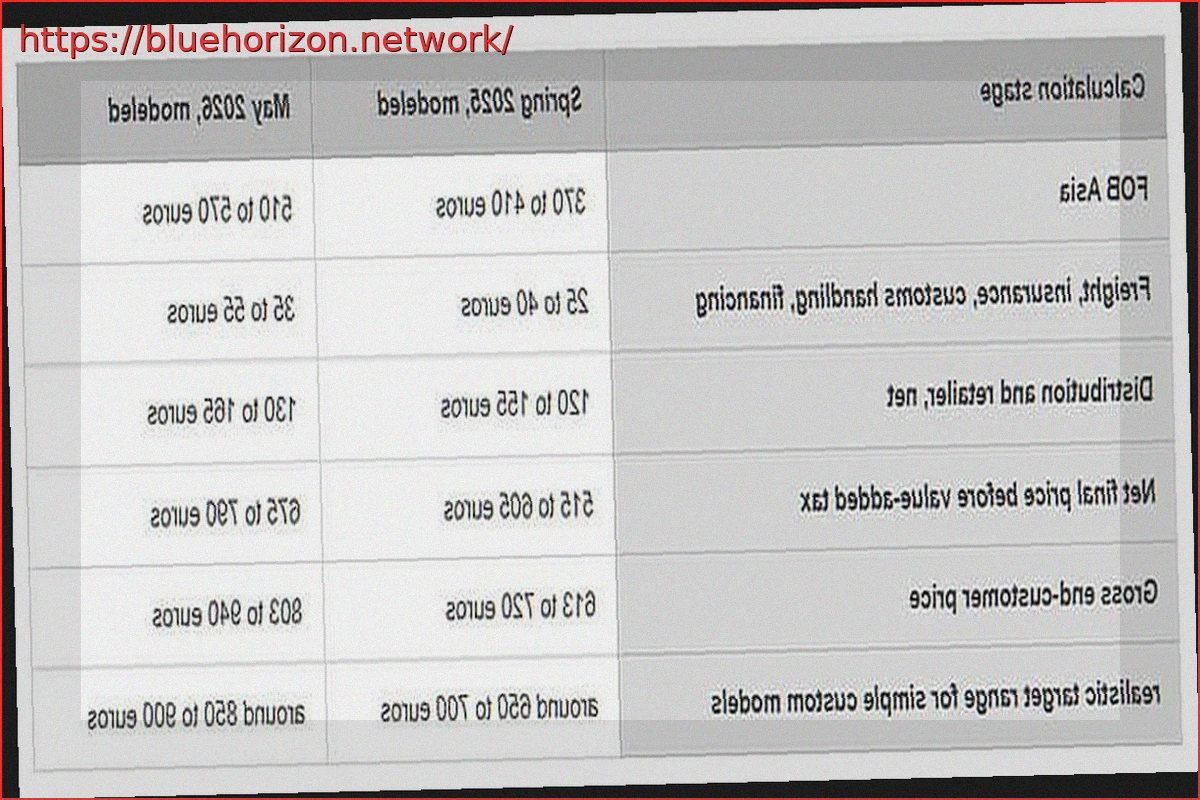
Consequently, the estimated FOB (Free On Board) price in Asia has jumped from €370-€410 to €510-€570. This is a significant leap, representing about €150 more before accounting for transportation, insurance, import duties, financing, distribution, retailer margins, and VAT. Therefore, a €150 increase at the source can translate to a final difference of €180 to €230 for the consumer.
The practical consequence is straightforward. A basic RX 9070 XT, currently priced around €660-€670, would likely see its sustainable price for new shipments closer to €850 to €900. This increase isn’t due to a surge in the Navi 48 GPU itself, but because the complete graphics card with 16 GB of memory now costs considerably more to manufacture.
The RTX 50 series will also face this price pressure. The RTX 5070 Ti utilizes 16 GB of GDDR7, which is faster but also more expensive, further increasing the BOM. The RTX 5070, with 12 GB of GDDR7, mitigates some of the cost increase but is less favorably positioned in terms of VRAM for the long term. According to Igor’s LAB’s analysis, manufacturers will likely respond by reducing MSRP models, pushing premium versions, and discontinuing cheaper products, primarily because memory has become the component that is breaking the real cost of manufacturing a graphics card.
This explains the trends we’ve observed in the past month, backed by concrete data. Manufacturers’ current strategy to weather this storm is to focus on selling premium models that offer higher margins. It’s a choice between that or closing down, and the decision is an easy one. If conditions continue to worsen, the next step will be to increase the prices of these premium models, which, given the current situation, is likely to happen before the end of 2026.