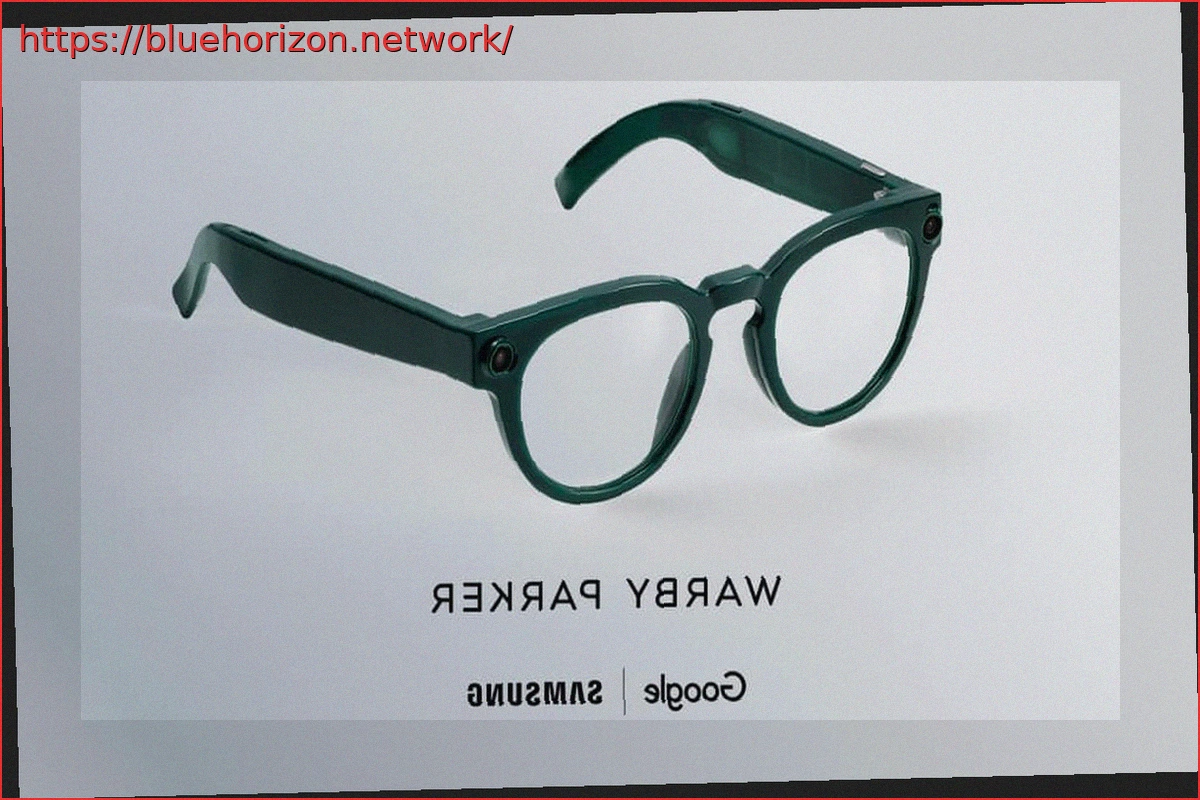
At Google I/O 2026, Samsung and Google offered the first glimpse of their new AI-powered smart glasses. Unlike Meta’s partnership with Ray-Ban, Samsung has collaborated with brands Gentle Monster and Warby Parker. The core idea remains the same: to deliver glasses with a conventional appearance that act as a mobile companion, enabling the use of Gemini AI through voice commands, the camera, speakers, and seamless connection with the smartphone ecosystem.
Google is now differentiating between two types of “smart glasses”: audio glasses, which will launch this autumn, and future glasses with a display capable of projecting information into the wearer’s field of vision. This mirrors Meta’s strategy of offering two distinct smart glasses, particularly concerning pricing. The first iteration will feature designs from Gentle Monster and Warby Parker, adopting an approach similar to Meta’s Ray-Ban glasses. These will offer voice assistance, a camera, notifications, translation, navigation, and app control, but without a visual interface directly in front of the eyes.
Samsung Provides Smart Glasses Hardware, While Google Manages the Operating System, Gemini, and Services
Samsung is responsible for the hardware engineering and integration with the Galaxy ecosystem. Google contributes the Android XR operating system, Gemini AI, and connectivity with its services. Gentle Monster will focus on more striking, fashion-forward styles, while Warby Parker will offer more classic and wearable designs. The partnership aims to overcome a significant historical challenge for smart glasses: their often overly technological, uncomfortable, or socially awkward appearance. The clear commercial message is: they must look like normal glasses first, with AI as a secondary feature.
Functionally, Google describes access to Gemini via a voice command or by touching the temple (similar to Meta). Users will be able to ask questions about what they are seeing, receive turn-by-turn navigation, get recommendations for nearby restaurants, summarize messages, send texts, manage calls, capture photos or videos, and translate conversations or text from menus and signs. The potential for more complex tasks is also mentioned, such as placing an order on DoorDash or interacting with apps like Uber or Mondly using voice commands. Importantly, Google states that the glasses will be compatible with both Android and iOS phones, although Samsung particularly emphasizes integration with its Galaxy devices.
Real-time translation is slated to be a standout feature. Samsung claims the glasses will be able to translate voice with audio that mimics the speaker’s tone and timbre, in addition to translating visible text on menus or signs. This functionality aligns well with a device that is always oriented towards what the user is looking at, though its actual effectiveness will depend on microphone quality, ambient noise, latency, and Gemini’s contextual accuracy.
Key Information, Including Launch Date and Price, Remains Undisclosed
Neither Samsung nor Google has confirmed the most crucial details. This includes the price, battery life, camera resolution, storage capacity, water resistance, and availability. The competitive landscape is clear, and Samsung’s and Google’s smart glasses will, at the very least, need to improve upon Meta’s offering.
Meta has been actively promoting its smart Ray-Ban glasses as a viable consumer product. Now, Google is attempting to re-enter the glasses market after the social and commercial failure of the original Google Glass. The key difference now is that the focus is less on traditional augmented reality and more on multimodal AI. These are glasses capable of seeing, hearing, understanding context, and acting upon smartphone apps, which presents a much more compelling and valuable proposition.
The strategy also appears to be prudent. Audio-only glasses will arrive first, being simpler, lighter, more affordable, and easier to market. Glasses with displays will follow, where Google is already discussing widgets, contextual visual information, and uses closer to augmented reality. This staged rollout makes sense: integrating a screen into glasses presents challenges related to battery life, weight, heat, privacy, field of view, and cost. With audio glasses, Samsung and Google can compete sooner against Meta and validate whether Gemini truly adds value to daily life.