Do you want your RTX 5090 not to depreciate? Cover it in gold until it's worth over $800,000
In the realm of hardware, it's well-known that GPUs rapidly lose value, much like a new car depreciates the moment it leaves the dealership. This depreciation is even more pronounced after just a year, especially with the arrival of new versions. However, ASUS has revealed an unusual strategy to counteract this: literally covering an RTX 5090 with gold. For those with the purchasing power of a sheikh or a Silicon Valley mogul, this is an opportunity to invest nearly a million dollars.
Surprisingly, this idea, which at first glance seems absurd, has transformed into an unexpected financial experiment, even promoted by ASUS itself. It's likely the company is doing it for sheer entertainment or as an elaborate joke, as its utility beyond marketing or speculative investment is questionable, at least at first glance.
ASUS Boasts Its Gold RTX 5090, Nearly Quadrupling Its Value! An Investment Against Inflation!
Given the recent surge in gold prices, this proposition takes on an interesting nuance. The model in question is a limited edition known as the ROG Astral Dhahab Edition, which stands out not only for its color but also for a matching case. ASUS has rebranded it as the ROG Astral Real Gold Edition, an even more exclusive and globally unique version, briefly showcased almost a year ago.
This RTX 5090, crafted with genuine and high-purity gold, has seen its value skyrocket to $818,000 thanks to the precious metal's rally.

This is no ordinary piece of hardware, nor just a Dhahab Edition; it is an even more exclusive creation that merges high-performance hardware, luxury, and audacious marketing, whose technical justification is complex. Nevertheless, its ostentatious nature invites a closer look.
ASUS unveiled this card at the Bilibili World event in China, presenting it as a unique piece derived from the ROG Astral RTX 5090 series. The card's casing was fabricated with approximately 5 kg of gold, provided by its current owner, who subsequently retrieved it. This valuable metal increases the device's total weight to about 7.2 kg, a considerably higher figure than the little over 2 kg that a standard GPU typically weighs, almost quadrupling its mass.
Internally, the card maintains powerful hardware: an RTX 5090 built on the Blackwell architecture, equipped with 32 GB of GDDR7 memory, 21,760 CUDA Cores, a PCIe 5.0 interface, and clock speeds up to 2,610 MHz in OC mode. These specifications position it at the forefront of current graphic performance. Beyond its extravagant exterior, it is an ASTRAL version with an added layer of excessive luxury and an exorbitant price, aimed at a niche of users with substantial financial capacity.
Its Value Nearly Doubles, Four Times More Than the Base Version

However, for this particular card, the value of the silicon is secondary; it is not conceived as a component to be inserted into a conventional system, but rather as an ultra-luxurious and exclusive collector's item. At the time of its unveiling by ASUS, the incorporated gold already represented an approximate value of $500,000. This means that the majority of its cost did not lie in the GPU itself, but in the precious metal comprising its casing and heatsink.
Due to the meteoric rise in gold prices, the theoretical value of the card's precious material has increased by approximately $277,000 in just seven months. Thus, what began as a technological extravagance, this RTX 5090 is now estimated to be worth $818,000.
If your desire is to prevent your graphics card from depreciating, this story suggests a particular strategy. This RTX 5090 stands, to date, as the most adorned with gold and, quite possibly, the most expensive graphics card ever created.
Fresh materials — Technology News

Google Pixel Devices Hit by Nightmare Bug: September Update Locks Out Some Users
Updating your phone should be a simple process: install, restart, and continue. But imagine completing the update, entering your usual unlock pattern, and the phone not even letting you finish it. Your photos and messages remain, but you're locked out. This is the predicament some Google Pixel
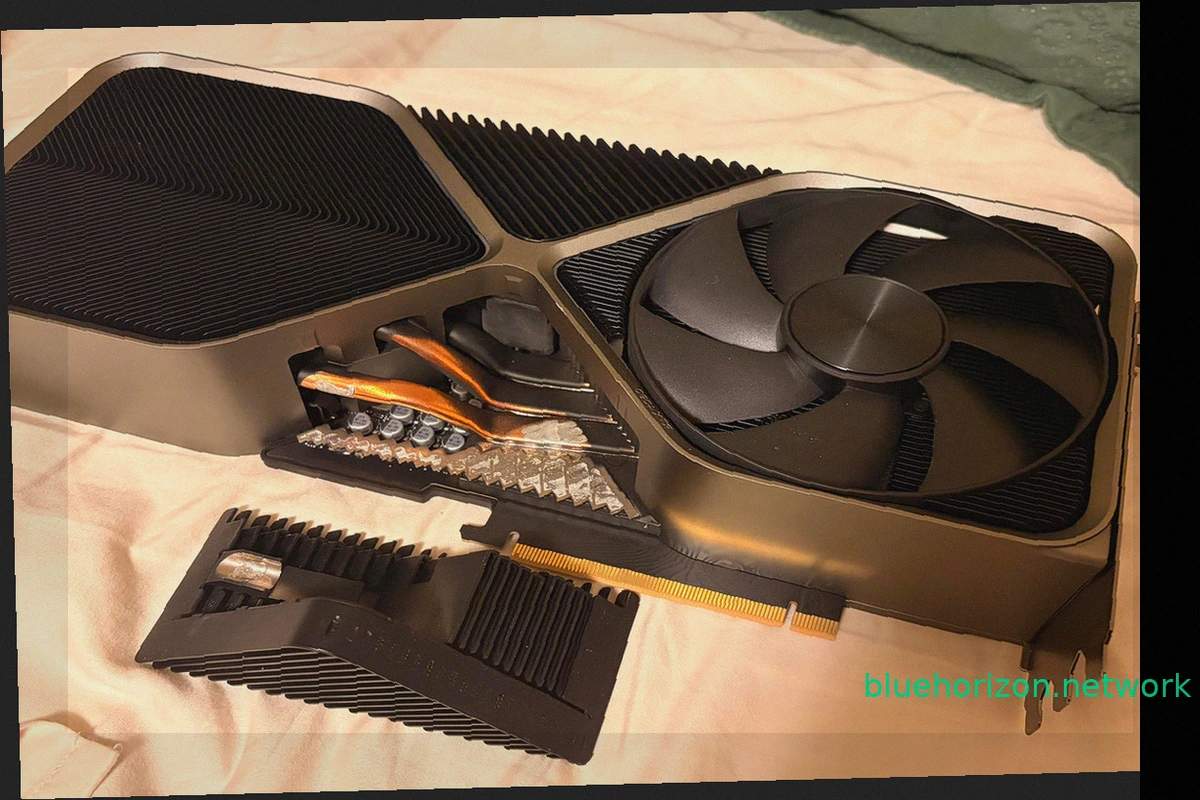
NVIDIA GeForce RTX 4090 Founders Edition Loses Part of Its Heatsink After Three Years
A NVIDIA GeForce RTX 4090 Founders Edition has presented an unusual problem, not with its power connector, but with its heatsink. This incident is unique, as a portion of the graphics card's massive heatsink literally detached while its owner was moving the computer. This wasn't a decorative c

Russian Missiles Strike Infrastructure of 1337x, Second Largest Torrent Tracker, Hitting Piracy
Russian missile attacks have damaged infrastructure belonging to popular torrent trackers like 1337x. Between September 23 and 27, 2026, Russia conducted strikes targeting data centers and communication facilities in Kyiv. These attacks temporarily disrupted internet access for approximately 1
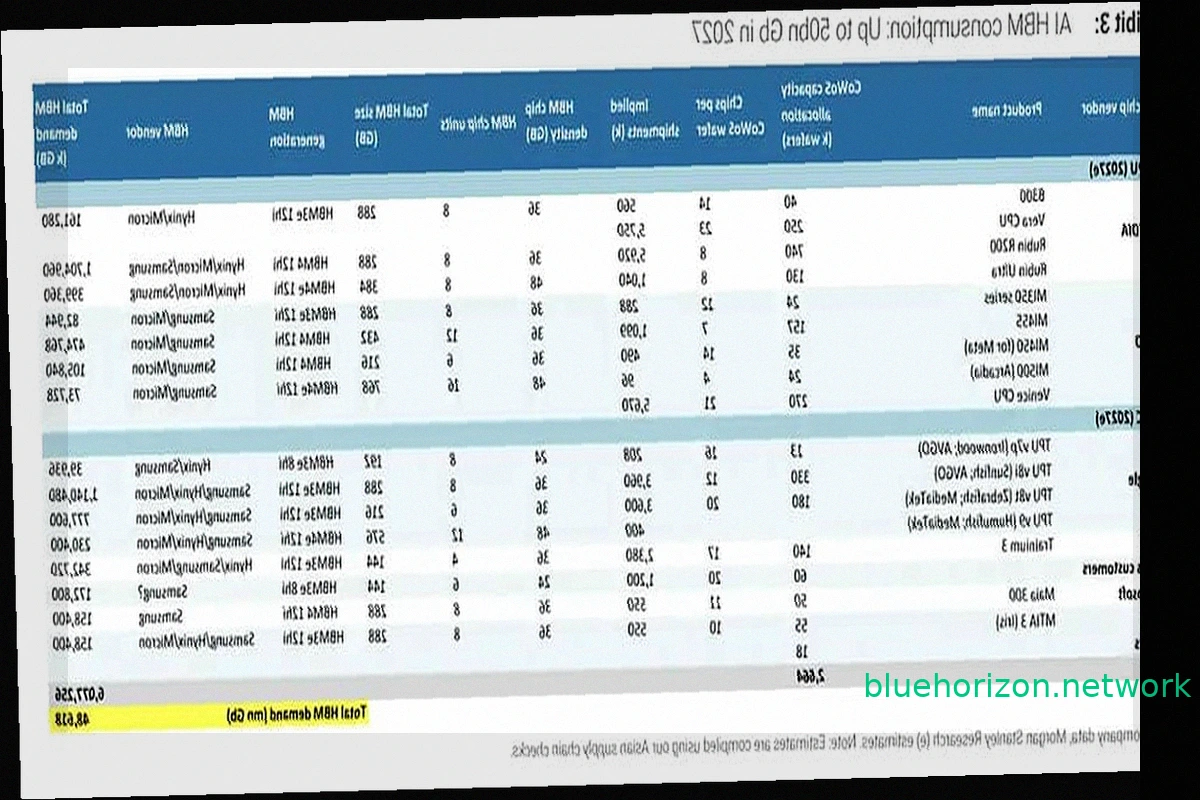
NVIDIA, Google, and AMD Poised to Control 85% of HBM Memory Demand by 2027
The "you'll own nothing and be happy" meme is finding a parallel in hardware, specifically memory. NVIDIA, Google, and AMD are set to command 85.4% of the global High Bandwidth Memory (HBM) demand by 2027, according to Morgan Stanley estimates. These three buyers will largely dictate the pace
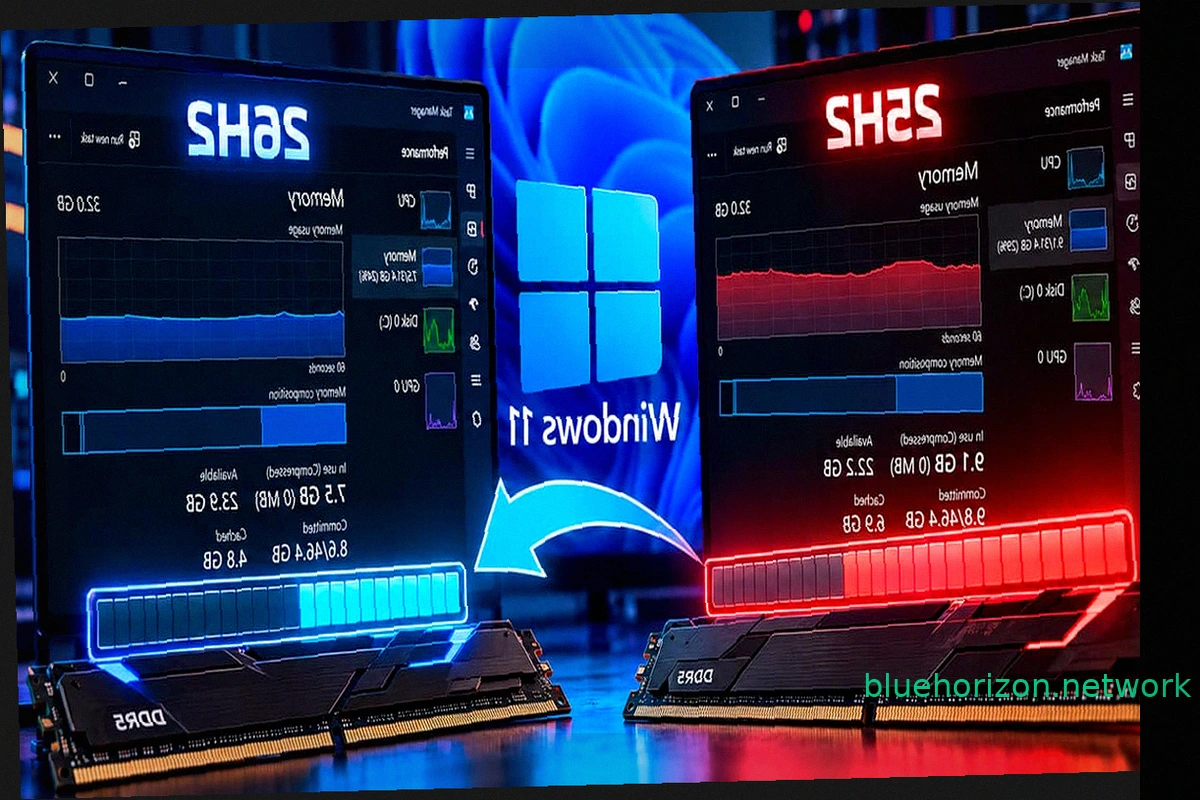
Windows 11 26H2 Reduces RAM Consumption by Up to 2 GB, But 8 GB Machines Still Struggle
Windows 11 26H2 is rolling out optimizations for RAM management. Some users report a noticeable decrease in RAM usage after installing this update, with certain systems showing a reduction of up to 2 GB compared to Windows 11 25H2 upon startup. However, initial findings suggest this improvemen

RTX 5090 fails with DLSS 5 after 48 hours for Chinese streamer
NVIDIA's RTX series introduced Tensor Cores, enabling technologies like DLSS. Early DLSS versions offered a noticeable drop in image quality compared to native resolution. DLSS 2 brought significant improvements, and DLSS 3 achieved parity or even superiority over native rendering. DLSS 4 cont