Profitable Online Age Verification: Governments to Boost Its Use on Platforms, Websites, and Social Media
Recently, in Australia, the use of VPNs surged due to the mandatory age verification required to access adult websites. This scenario could soon become a global norm. Just as Australia has pioneered the ban on social media for children under 16, setting a precedent that other countries may follow, online age verification appears destined to become a standard worldwide practice.
The primary reason for this shift is that online age verification has evolved from a nascent idea into a robust regulatory tool. With this transformation, major platforms no longer have valid excuses to delay implementing age restrictions. Their previous arguments, which cited a lack of accuracy, technical difficulty, invasiveness, and high costs, are now obsolete, as the current situation is diametrically opposite.
The Maturity and Affordability of Age Verification Technology Drive Government Adoption
As we anticipated, age verification now goes beyond a simple 'yes/no' checkbox for being over 18. A multi-layered system will be implemented to authenticate the age of each user behind a smartphone or computer. This will range from using artificial intelligence for initial detection to more robust methods such as age estimation via selfies or video-selfies, and validation through official documents like national ID cards, driver's licenses, or credit cards.

This approach aligns with Australia's official architecture for its social media law for minors under 16, with the European Commission's roadmap for proving user age while preserving privacy, and with innovations from Apple and Google. These companies already provide APIs that allow applications to obtain age ranges or age signals without necessarily revealing the exact date of birth.
The interest in "incentivizing" its use stems from the significant improvement of this technology in two key areas: accuracy and cost. Basic automated analyses are now reported to cost less than a dollar per user, and at scale, this price could drop to mere cents. Continuous testing by the National Institute of Standards and Technology (NIST) confirms a notable improvement in facial age estimation over time. This detail is crucial because it dismantles one of the major historical objections: that these systems were either too inaccurate or too expensive for widespread deployment.
Challenges Persist in User Age Identification
Despite the technology being promoted for its improvements and cost reduction, there are still ambiguities around legal thresholds where error rates are higher. Some systems perform less effectively with low-quality cameras, certain skin tones, or when processing is exclusively local on the device. This opens the door for minors to attempt to bypass the system using physical tricks, masks, or makeup. To address this, a "successive validation" is proposed: progressive facial scans that, if age is questioned, would escalate to more robust verification methods.

Australia has established itself as a pioneering laboratory for restricting internet access for minors. As of December 10, 2025, individuals under 16 will be prohibited from accessing social media. Furthermore, effective today, all adult websites, video games rated 18+, and chatbots capable of generating restricted content are mandated to identify each user either biometrically or through official documentation. It is reported that, prior to these measures, millions of accounts suspected of belonging to minors had already been blocked.
Platforms, which previously justified their inaction by citing the unreliability and high cost of the technology, are now compelled to integrate at least some form of user age recognition. The United Kingdom already imposes strict controls on certain services, and Brazil has made reliable age verification a legal obligation for specific content. In the European Union, Apple and Google are building the technical foundation to scale these future requirements. Thus, age verification is beginning to resemble a new essential layer of digital infrastructure, despite the inherent tensions between child protection, privacy, potential biases, false positives, and the risk of excessive surveillance.
Fresh materials — Technology News

Google Pixel Devices Hit by Nightmare Bug: September Update Locks Out Some Users
Updating your phone should be a simple process: install, restart, and continue. But imagine completing the update, entering your usual unlock pattern, and the phone not even letting you finish it. Your photos and messages remain, but you're locked out. This is the predicament some Google Pixel

NVIDIA GeForce RTX 4090 Founders Edition Loses Part of Its Heatsink After Three Years
A NVIDIA GeForce RTX 4090 Founders Edition has presented an unusual problem, not with its power connector, but with its heatsink. This incident is unique, as a portion of the graphics card's massive heatsink literally detached while its owner was moving the computer. This wasn't a decorative c

Russian Missiles Strike Infrastructure of 1337x, Second Largest Torrent Tracker, Hitting Piracy
Russian missile attacks have damaged infrastructure belonging to popular torrent trackers like 1337x. Between September 23 and 27, 2026, Russia conducted strikes targeting data centers and communication facilities in Kyiv. These attacks temporarily disrupted internet access for approximately 1
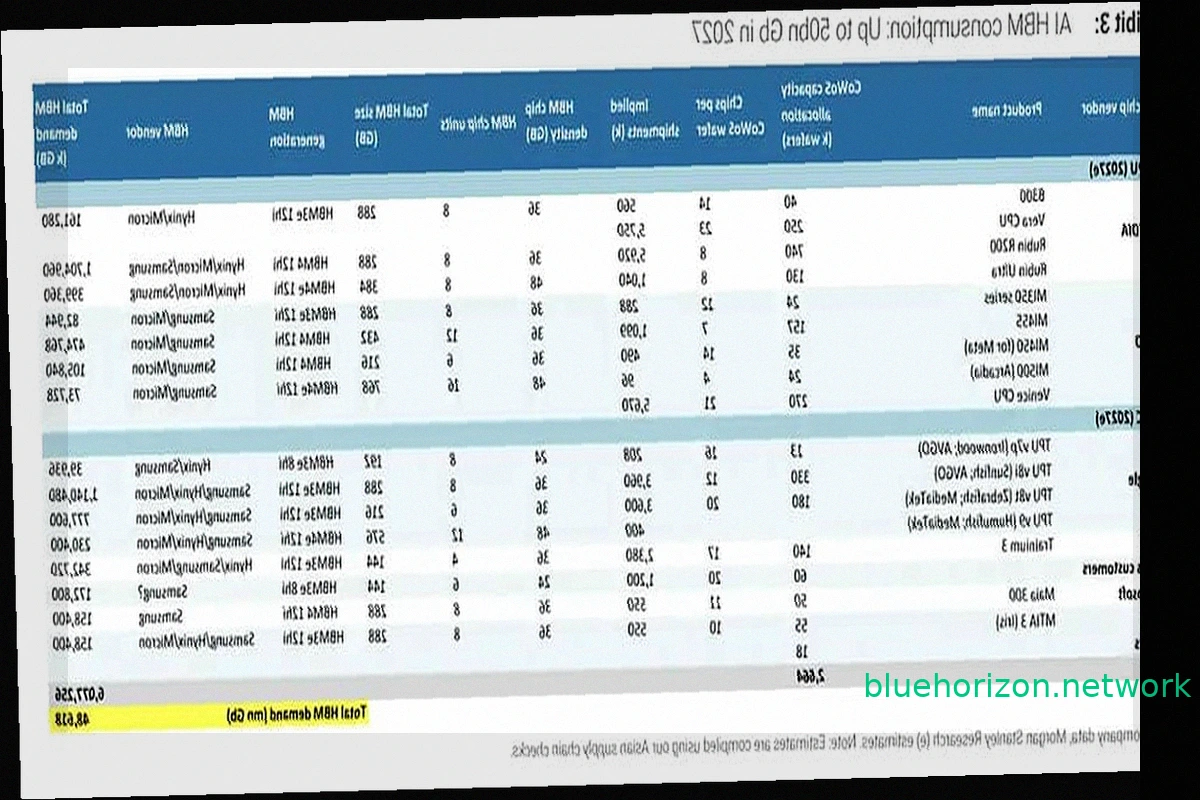
NVIDIA, Google, and AMD Poised to Control 85% of HBM Memory Demand by 2027
The "you'll own nothing and be happy" meme is finding a parallel in hardware, specifically memory. NVIDIA, Google, and AMD are set to command 85.4% of the global High Bandwidth Memory (HBM) demand by 2027, according to Morgan Stanley estimates. These three buyers will largely dictate the pace

Windows 11 26H2 Reduces RAM Consumption by Up to 2 GB, But 8 GB Machines Still Struggle
Windows 11 26H2 is rolling out optimizations for RAM management. Some users report a noticeable decrease in RAM usage after installing this update, with certain systems showing a reduction of up to 2 GB compared to Windows 11 25H2 upon startup. However, initial findings suggest this improvemen

RTX 5090 fails with DLSS 5 after 48 hours for Chinese streamer
NVIDIA's RTX series introduced Tensor Cores, enabling technologies like DLSS. Early DLSS versions offered a noticeable drop in image quality compared to native resolution. DLSS 2 brought significant improvements, and DLSS 3 achieved parity or even superiority over native rendering. DLSS 4 cont