
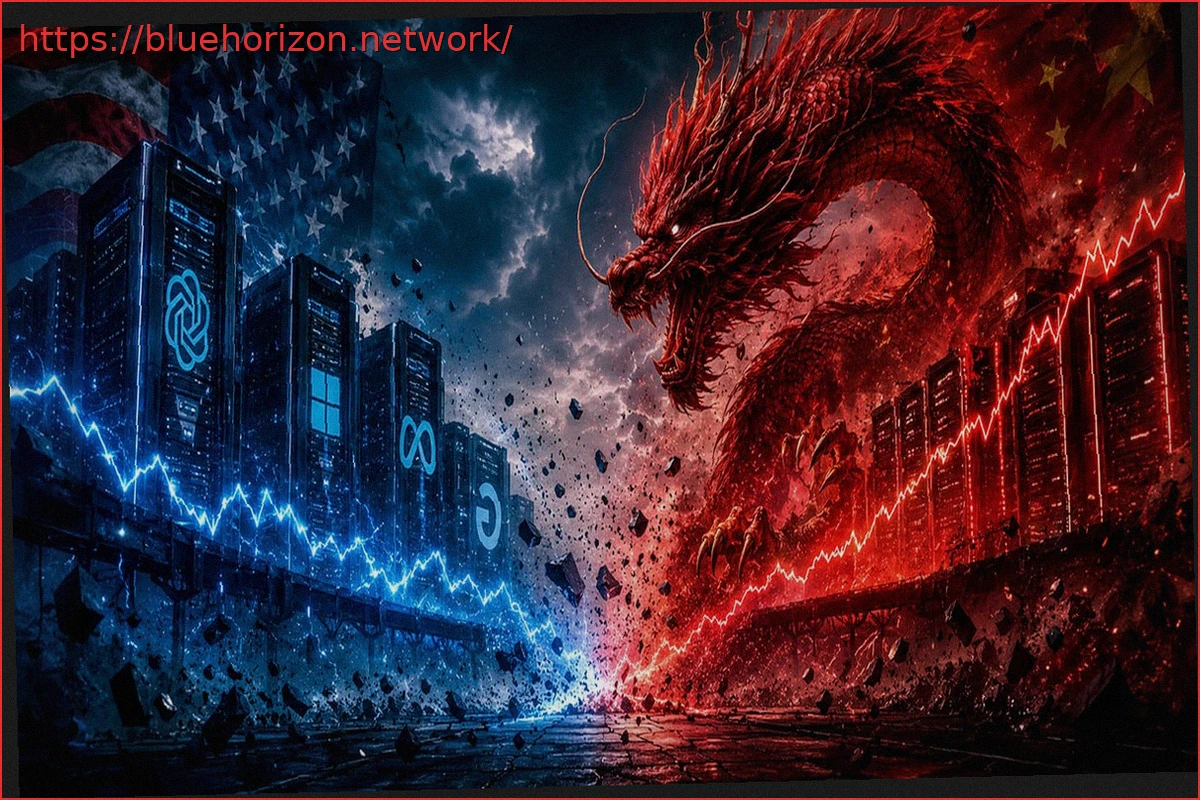
DeepSeek is making a significant move in the generative AI pricing war, permanently slashing the cost of its flagship model, DeepSeek-V4-Pro, by 75%. This drastic reduction means API rates are now a quarter of their original price. According to Reuters, costs have fallen to between 0.025 and 6 yuan per million tokens (approximately $0.0032 to $0.76 USD), a substantial drop from the previous 0.013 to 3.04 euros per million tokens, depending on usage. DeepSeek’s official documentation now lists the V4-Pro at $0.003625 per million input tokens with cache, $0.435 per million input tokens without cache, and $0.87 per million output tokens.
Crucially, this is not a temporary promotion but a permanent price adjustment. The official API page indicates that the DeepSeek-V4-Pro model’s price will officially settle at one-fourth of its original cost after the current 75% promotional period concludes on May 31, 2026. This effectively makes the promotional price the new standard, posing a significant challenge to other players in the booming AI industry.
DeepSeek Aims to Attract Foreign Developers and Companies with DeepSeek-V4-Pro
This aggressive strategy targets the most powerful model in the V4 family, not just a lighter variant. DeepSeek-V4-Pro is positioned alongside V4-Flash, a more cost-effective and speed-oriented version. Both models boast a massive 1 million token context window, support reasoning and non-reasoning modes, JSON output, tool calling, and compatibility with OpenAI and Anthropic formats. Furthermore, DeepSeek states a maximum output of up to 384,000 tokens, which is exceptionally high for complex workflows, agents, programming tasks, or in-depth document analysis.
The hardware context is also important. DeepSeek-V4 was initially developed to be optimized for Huawei’s AI chips, specifically within the Ascend ecosystem. While DeepSeek hasn’t explicitly confirmed if this permanent price reduction is directly tied to increased availability of Huawei Ascend 950 chips, the company had previously linked the high price of the V4-Pro to limitations in high-end computing capacity. At its launch, DeepSeek indicated that the Pro model’s price could significantly decrease once Ascend 950 supernodes became more widely available in the latter half of the year.
With this move, DeepSeek is establishing a structural competitive advantage through its per-token cost. This has several implications for developers and businesses, significantly lowering the expense of using advanced models for token-intensive tasks like agents, programming assistants, long document analysis, RAG (Retrieval-Augmented Generation), automation, and persistent context workflows. The particularly low cost for input with cache also benefits use cases involving extensive context reuse, such as document bases, agents with session memory, or enterprise applications that frequently repeat lengthy instructions.
Why Choose Significantly More Expensive Competitors Now?
For context, DeepSeek V4-Pro is priced at $0.435 per million input tokens without cache, $0.003625 with cache, and $0.87 per million output tokens. In comparison, leading models like OpenAI’s GPT-5.5 and Anthropic’s Claude Opus 6 are substantially more expensive. With this price reduction, DeepSeek V4-Pro is 29 to 34 times cheaper than these cutting-edge models. While DeepSeek’s Flash or Mini models may not offer as drastic a price difference against faster, cheaper variants from competitors, they remain a more economical option.
DeepSeek is effectively igniting a price war. By driving down costs to such an extent, competitors with higher infrastructure expenses, larger profit margins, or lower efficiency are forced to choose between losing market share or cutting their own prices. This situation is reminiscent of when the United States imposed sanctions on the Chinese industry for destabilizing the RAM market with inexpensive DRAM DDR4.
Chinese manufacturers like CXMT and Fujian Jinhua had offered DDR4 at discounts of up to 50% compared to South Korean rivals. This intensely pressured the market, to the point where it was no longer economically viable for Korean companies to produce this memory. In this instance, DeepSeek is employing a similar tactic, but with AI tokens instead of physical chips.