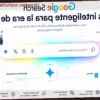

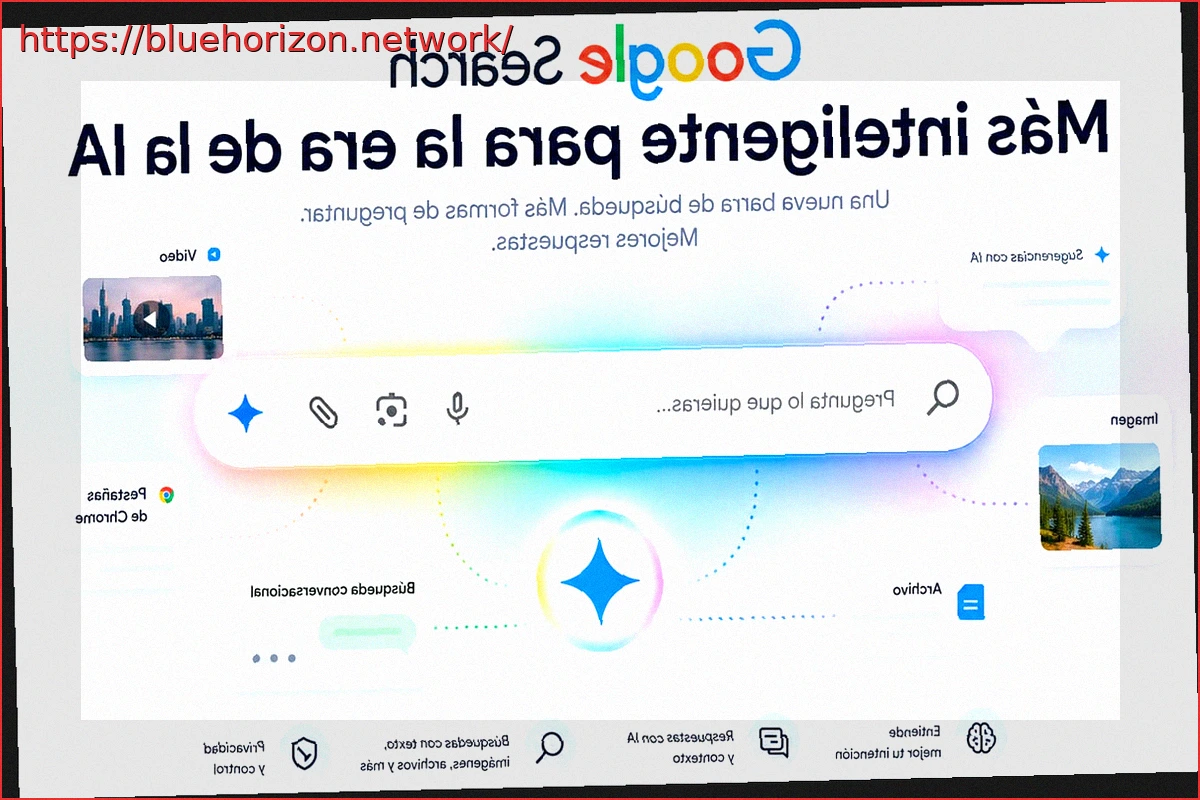
Following its recent innovations with AI-powered mouse cursors, Google has unveiled what it claims is the most significant overhaul of its search bar in over 25 years, designed to meet the demands of the AI era. The core idea is to move beyond the traditional keyword-based search box and create a much more adaptable interface. This new search bar will be capable of handling lengthy queries, additional context, and various content types. In practice, Google Search is evolving to become more like a conversational assistant, with AI Mode at the heart of the user experience and Gemini 3.5 Flash as the new default global AI model. This strategic shift comes shortly after Google enhanced mouse cursors with AI capabilities.
The company reports that AI Mode already boasts over 1 billion monthly users, just one year after its introduction, and that queries within this mode have doubled each quarter since its launch. Google also indicates that search activity has reached an all-time high, a finding that challenges the notion that chatbots are simply replacing traditional search. Instead, Google’s perspective is that AI is prompting users to search more frequently and in novel ways. However, it’s important to note that these 1 billion monthly users are accessing information without directly visiting websites, a trend that could lead to thousands of websites shutting down monthly as they lose their primary revenue source: user traffic.
Reimagining the Search Bar: A Gateway to Google’s AI
The pivotal change lies in the new intelligent search bar. No longer designed solely for brief keywords, it’s now intended to accommodate the description of complete needs. The interface dynamically expands to provide users with more space, anticipates their intent, and offers AI-generated suggestions that go beyond conventional auto-completion. Furthermore, it allows users to incorporate text, images, files, videos, and even Chrome tabs as input for their queries. Essentially, Google aims for the search engine to comprehend not only what you type but also the contextual material you provide.
This redesign also blurs the lines between Google Search, AI Overviews (AI-generated summaries), and AI Mode. From an AI-generated response, users can directly launch follow-up questions and enter into a conversation with AI Mode, all while maintaining the context of their original query. Google states that this enhanced experience is now available globally on both desktops and mobile devices, with the new intelligent search bar set to roll out progressively in countries and languages where AI Mode is already accessible.
The new search bar will be powered by the Gemini 3.5 Flash model. Google presents this model as being optimized for performance, speed, handling extended tasks, agentic workflows, and programming. According to Google DeepMind, Gemini 3.5 Flash is accessible to everyone through the Gemini app and AI Mode in Google Search, and will also be available to developers via Gemini API, AI Studio, Android Studio, and Google Antigravity. The company also announced that Gemini 3.5 Pro will be released next month, but for now, Flash is the focus for Search due to its balance of capability and latency.