
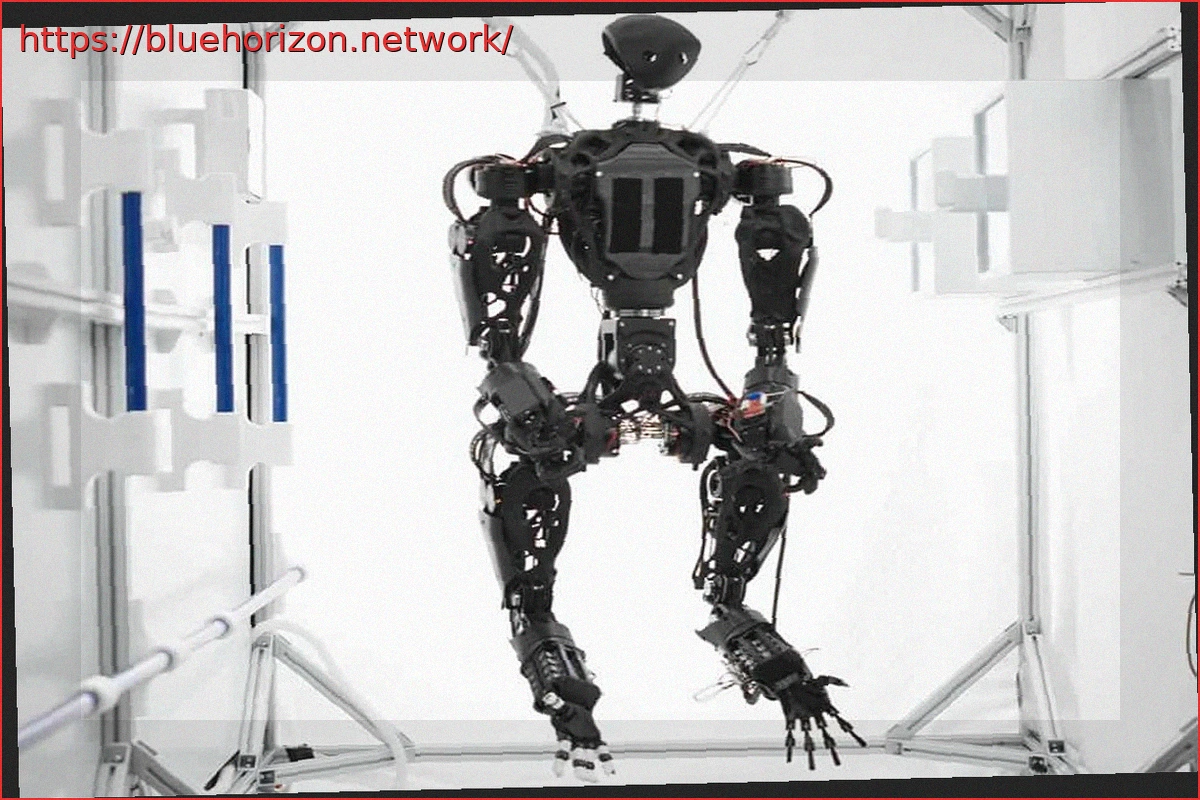
Robotics has advanced significantly in a short period, thanks to the integration of AI, enabling robots to learn a wide range of tasks. We’ve seen bipedal humanoid robots and various quadrupedal designs. However, an unexpected development is Helios, a humanoid robot with four arms and no legs, created by ORBIT Robotics to aid astronauts.
Humanoid robots have gained considerable popularity. China has begun mass production of thousands of them for clients. We can find affordable humanoid robots on platforms like AliExpress for a few thousand dollars, alongside more expensive industrial-grade models. In the industrial sector, brands like Tesla with its Optimus robots, and numerous companies from China, such as Unitree Robotics with their R1, are prominent.
ORBIT Robotics Unveils Helios, a 4-Armed, Legless Robot to Assist Astronauts in Zero Gravity
The appeal of humanoid robots lies in their similarity to humans, allowing them to perform similar tasks and movements. Quadrupedal robots, designed to resemble animals like dogs, serve different purposes. In contrast, a 4-armed robot without legs might seem unconventional, but ORBIT Robotics’ creation should be viewed as a ‘robot for the future‘. Its intended use is to support astronauts on space stations, though its utility is currently limited.
We don’t yet have extensive space infrastructure with astronauts working non-stop on space bases as depicted in science fiction. However, as this future approaches, astronauts will undoubtedly appreciate the assistance of robots like Helios. With its four arms, it is an optimal candidate for microgravity environments in space. These multiple arms allow it to perform tasks such as inventory loading and unloading, object sorting, and stock registration.
Helios Aims to Free Up Astronauts’ Time Spent on Maintenance, Potentially Saving $140,000 in Labor Costs
According to ORBIT, space crews dedicate 35% of their time to maintenance tasks that this robot could handle. Furthermore, it offers significant cost savings; an estimated 50 hours of loading and unloading could incur labor costs of up to $140,000. Therefore, Helios presents a more economical alternative to human labor (yes, even robots working off-world might displace human jobs). It’s important to note that the robot is only effective in zero-gravity conditions, as its lack of legs means it has no other means of locomotion.
Interestingly, the mobility system for its four arms utilizes a ‘tendon system‘ rather than heavy motors. This reduces the weight of the arms, allowing for more fluid movements, and features elbow joints for enhanced flexibility and range of motion.