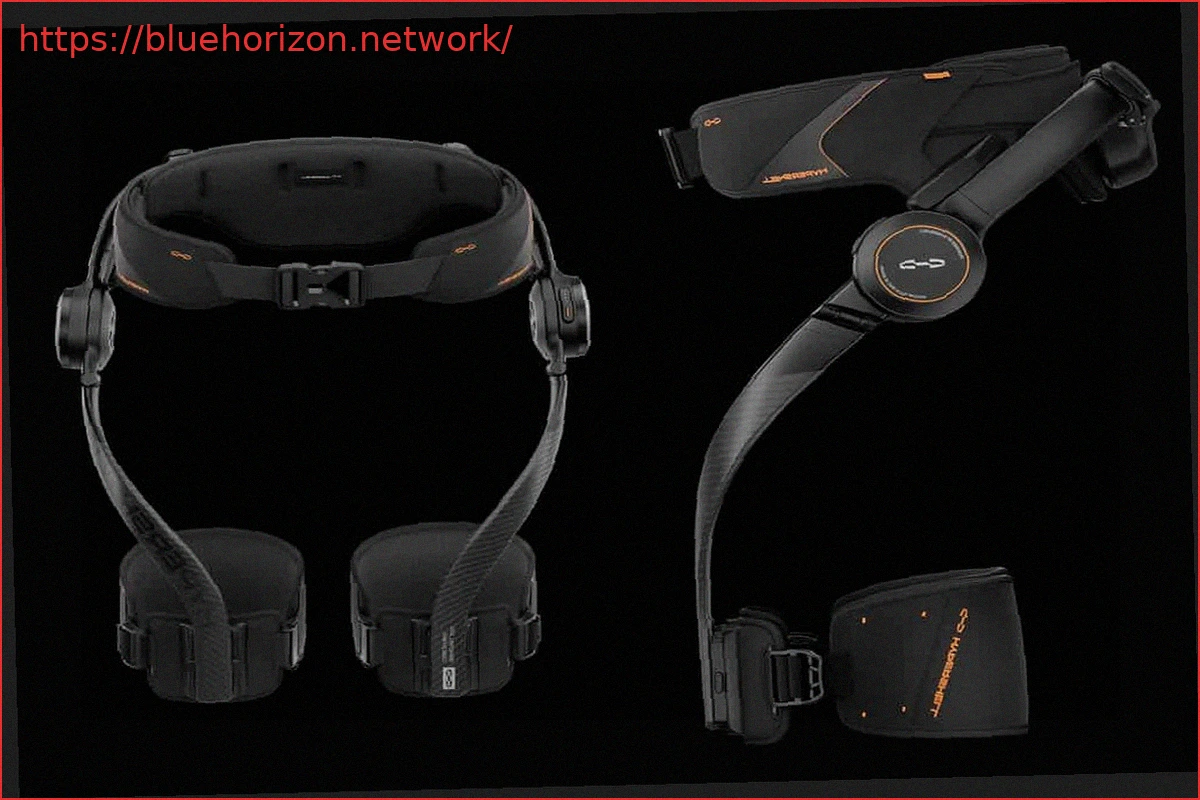
While it may seem like something from the future, exoskeletons have been around for decades and are gradually gaining traction in the consumer market. It remains a niche product, but some consider it revolutionary, enabling us to receive assistance with walking or running. This is useful in two ways: making movements easier and reducing fatigue, or directly enabling people with mobility impairments to move. The Hypershell X Ultra S exoskeleton falls into the former category; it’s a model that assists you in walking or running, this time utilizing AI and motors to control leg movement.
The first prototypes of modern exoskeletons began in 1890, but they were very different. Instead of motors, they used compressed gas bags to aid human movement. Fast forward to the 1960s, and the U.S. Army began developing the Hardiman, an exoskeleton designed for strength-enhancing tasks, capable of lifting up to 680 kg.
Hypershell X Ultra S Exoskeleton Integrates AI to Assist Every Movement
Interest in exoskeletons resurfaced in the early 2000s, with a greater focus on rehabilitation. Notably, Spain’s CSIC created the world’s first pediatric exoskeleton. The 2010s and especially the 2020s have seen a resurgence of exoskeletons aimed at a broader audience for practical uses like walking, running, or hiking. This is where the Hypershell X Ultra S comes in, as it is targeted at hikers and outdoor enthusiasts.
This exoskeleton doesn’t offer a fixed movement assist like others. Instead, its motors are linked to a control system called HiperIntuition. This is an AI model that analyzes a person’s movement, the terrain, and the effort being exerted to adjust motor power in real-time. Consequently, it provides personalized and dynamic assistance based on the situation and your needs.
Priced at $2,000 and Offering 30km of Range
The use of AI to control movement is evident in various scenarios. For example, when ascending a slope, the motor torque increases, requiring less effort from the user. Conversely, when walking on flat ground, it provides less assistance to conserve energy. This exoskeleton features two motors in the hips that deliver up to 1,000W, and everything can be controlled via a mobile app. While the system appears to function well, it has certain limitations. During descents, the AI does not engage automatically, and users must control everything manually.
Another area with limitations is using the exoskeleton while cycling, where it doesn’t offer much contribution. On the other hand, its battery life provides approximately 30 kilometers of range under normal usage, which may be less in practice. As for its price, it stands at $2,000, so it’s up to you to decide if investing in an AI-powered exoskeleton of this type is worthwhile.