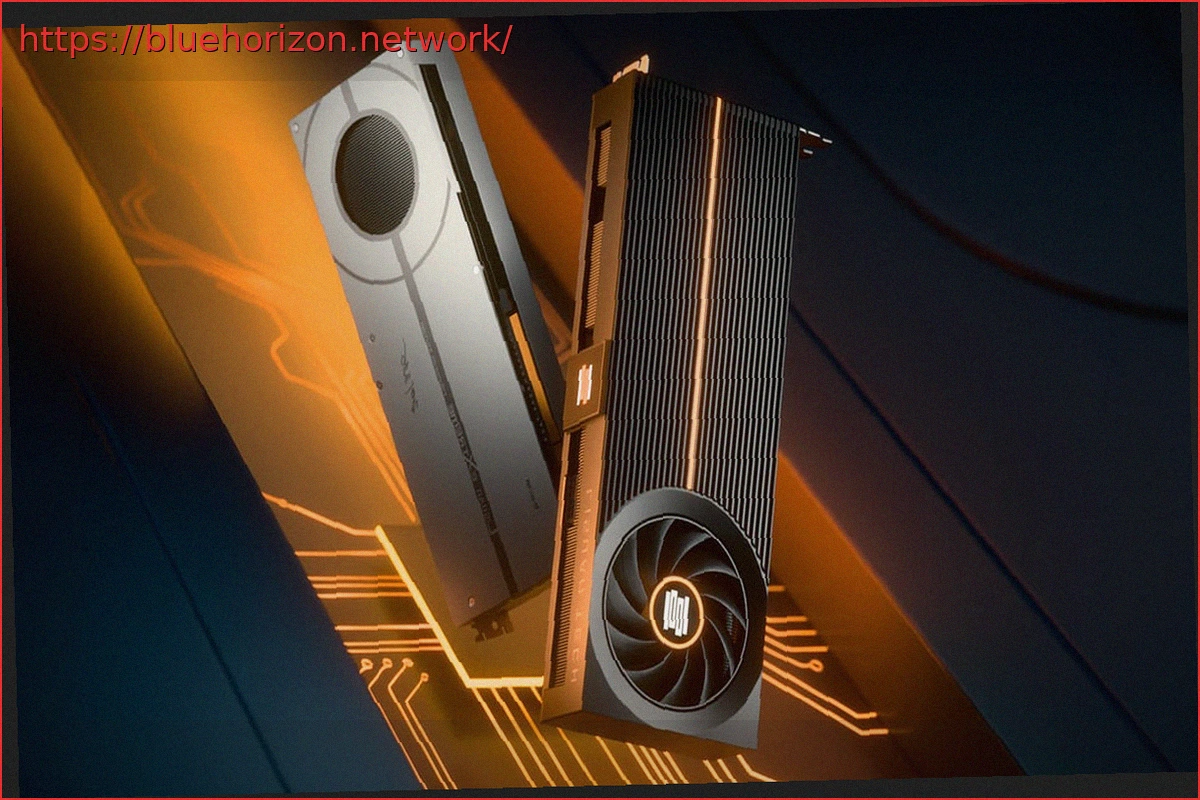
Lisuan achieved what seemed impossible with its first consumer gaming GPU: the LX 7G100 sold out its initial batch after reaching approximately 30,000 reservations. This happened shortly after the company released new WHQL drivers for Windows and an official optimization guide for 40 games. The news is significant not because the card is competitive with NVIDIA, AMD, or Intel, but because it shows that China now has a domestic gaming GPU capable of running modern games functionally from day one. However, there’s still a long way to go in terms of drivers.
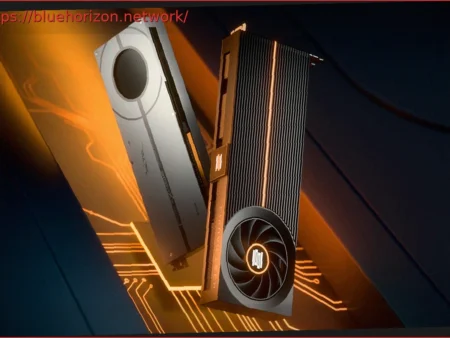
The Lisuan LX 7G100 utilizes a homegrown TrueGPU architecture, with a chip manufactured on a 6 nm process, paired with 12 GB of GDDR6 memory and support for modern APIs like DirectX 12, Vulkan 1.3, OpenGL 4.6, and OpenCL 3.0. On paper, Lisuan presented it as a Chinese alternative for gaming, and the company even indicated performance close to that of a GeForce RTX 4060 in certain synthetic benchmarks. Nevertheless, independent tests have significantly lowered those expectations. This is partly because there’s still work to be done on the drivers. Despite this, selling out the entire lot of graphics cards clearly indicates that Chinese users don’t mind paying for a ‘lesser product’ in exchange for supporting their national industry.
Lisuan LX 7G100 Promises Accelerated Driver Support to Increase Adoption of its First Gaming GPU
To begin, the company has released an official guide with recommended settings for 40 games, including 29 DirectX 12 titles, 9 DirectX 11, and 2 DirectX 9. Among the included games are major titles like Cyberpunk 2077, Black Myth: Wukong, Horizon Forbidden West, WUCHANG: Fallen Feathers, PUBG, Stellar Blade, Resident Evil 4, and GTA V. The strategy is clear: if the GPU doesn’t yet have a mature driver ecosystem like NVIDIA or AMD, Lisuan attempts to compensate by telling users exactly which API, graphical settings, scaling, and frame generation they should use in each title.
Many recommendations rely on using AMD FSR 2 or FSR 3 upscaling and Frame Generation to mask or stabilize the experience. In Cyberpunk 2077, for example, Lisuan recommends high or ultra graphics settings with AMD FSR 3.0 on automatic, sharpness 0.5, and FSR 3.1 Frame Generation. In Black Myth: Wukong, they recommend FSR 3, activated frame generation, and medium/high quality. This means the card can run modern games, but in many cases, it needs to rely on upscaling and frame generation to achieve presentable results, until the drivers are perfected to reach the GPU’s true performance potential.
The other significant development is the drivers. Lisuan now has a first WHQL Release v29.0.2260.76 driver available, weighing around 220 MB for the Windows operating system. WHQL certification doesn’t magically make the GPU competitive, but it is an important step: it implies that the driver has passed Microsoft’s validation process for Windows, which is particularly valuable for a new manufacturer in a market dominated by three well-established players.
Performance Varies Significantly Depending on the Game
In terms of real-world performance, the Lisuan LX 7G100 is far from rivaling a GeForce RTX 4060. According to tests published by the local outlet Chaowanke, the GPU achieved 88 FPS in Cyberpunk 2077 with FSR 3 Quality and Frame Generation, compared to 232 FPS on an RTX 4060 and 243 FPS on an Intel Arc B580. In Black Myth: Wukong, the LX 7G100 managed 56 FPS, compared to 115 FPS on the RTX 4060. In Forza Horizon 5, the difference was even more stark: 48 FPS on the Chinese card versus 228 FPS on the RTX 4060.
This is the most notable aspect of the news. In the real world, the Lisuan LX 7G100 is not only less powerful than a GeForce RTX 4060 but also slightly more expensive. Its price, after conversion, is around 420 euros or 480 dollars. For that price, there are many alternatives from AMD, Intel, and NVIDIA, and currently, all these alternatives are also more powerful. Depending on the game, the RTX 4060 is between 20% and 70% faster.
The Lisuan LX 7G100 cannot be classified as a failure or a bad launch. It’s their first consumer gaming GPU, and one has to start somewhere. Ultimately, the goal isn’t to surpass NVIDIA but rather to have a real domestic option. The difficult part has been done: having a domestic GPU capable of running modern games with DirectX 12, Vulkan support, and WHQL drivers. From this point, things can only get better, meaning improving drivers and preparing for future, more powerful chips.