
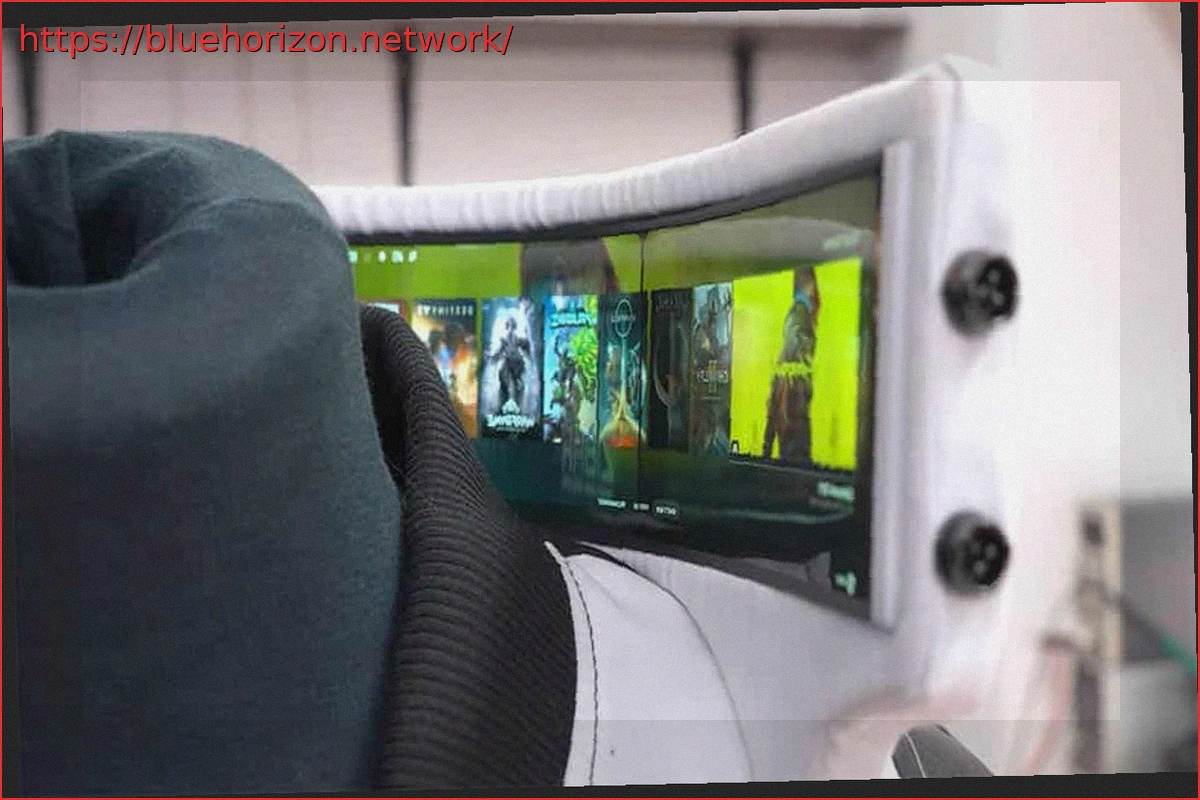
The cyberpunk universe paints a picture of a futuristic, often decadent society where body modifications are commonplace to enhance abilities. However, these metallic implants carry risks, potentially leading to cyberpsychosis, as depicted in the popular game Cyberpunk 2077. This game achieved significant success, selling over 35 million copies, and was further amplified by the popular anime series Cyberpunk: Edgerunners. Now, the iconic jacket from Cyberpunk 2077 (distinct from David’s jacket in Edgerunners) has been reimagined with a cutting-edge twist: the integration of several flexible OLED screens.
Cyberpunk 2077, released in 2020, was CD Projekt RED’s highly anticipated follow-up to the successful The Witcher 3. Expectations were immense, and many players experienced disappointment upon its launch due to numerous bugs and widespread negative reviews. Despite being playable from start to finish, the game was plagued by technical issues, with many features added through subsequent updates. Over time, Cyberpunk 2077 regained its lost reputation, its reviews improved, and it is now considered one of CD Projekt’s best titles and a standout in its genre.
Returning to Cyberpunk 2077, this time not the game itself, but one of its most recognizable pieces of attire: the jacket featured by the protagonist in the game’s trailers, which also bears a resemblance to Jackie Welles’ design. We’ve seen this jacket recreated in many cosplays, and it’s even available for purchase. However, this version is exceptional. Content creator Zibartas has recreated the NUSA Infiltrator jacket seen in Cyberpunk 2077, featuring messages displayed on an integrated screen, which sparked the idea for flexible OLED technology.
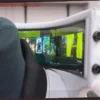
We’ve encountered OLED screens in various devices that can be folded or even expand in size. Nevertheless, they often have limitations in movement and aren’t entirely flexible to the point of twisting or bending completely, as seen in some foldable OLED panels. For this project, the creator opted to use multiple screens, setting them at a degree of flexibility sufficient to avoid damage while still conforming to the jacket collar’s curve. Ultimately, 4 flexible OLED screens were used to cover the collar. Naturally, something was needed to connect and synchronize them, leading to the use of a Raspberry Pi for this purpose.
While the project seemed complete, the challenge of synchronizing all the screens to create the illusion of a single, curved display remained. The initial Raspberry Pi models used did not function as intended due to hardware decoder limitations. Consequently, the creator switched to different models and implemented synchronization using Python and GPIO.
Another hurdle arose after assembling the jacket and 3D-printed components: the screen cables proved to be very fragile, and one screen ceased to function after excessive cable bending. This necessitated the creation of a more rigid structure to protect the delicate areas while still allowing the screens to flex. Following this, only aesthetic refinements were needed to make the jacket more faithful to the video game. The creator finally showcased the successful outcome, even demonstrating the ability to play Steam games on the jacket’s displays, albeit not very practically.