
The European Union is preparing to backtrack, at least temporarily, on a portion of its sanctions against Russia. According to Reuters, Brussels will propose a temporary lifting of restrictions against a Chinese semiconductor supplier, identified as Yangzhou Yangjie Electronic Technology. This company is a leading Chinese manufacturer specializing in the design, production, and sale of power semiconductor wafers, chips, and discrete components – the very chips that Europe’s entire industry relies on.
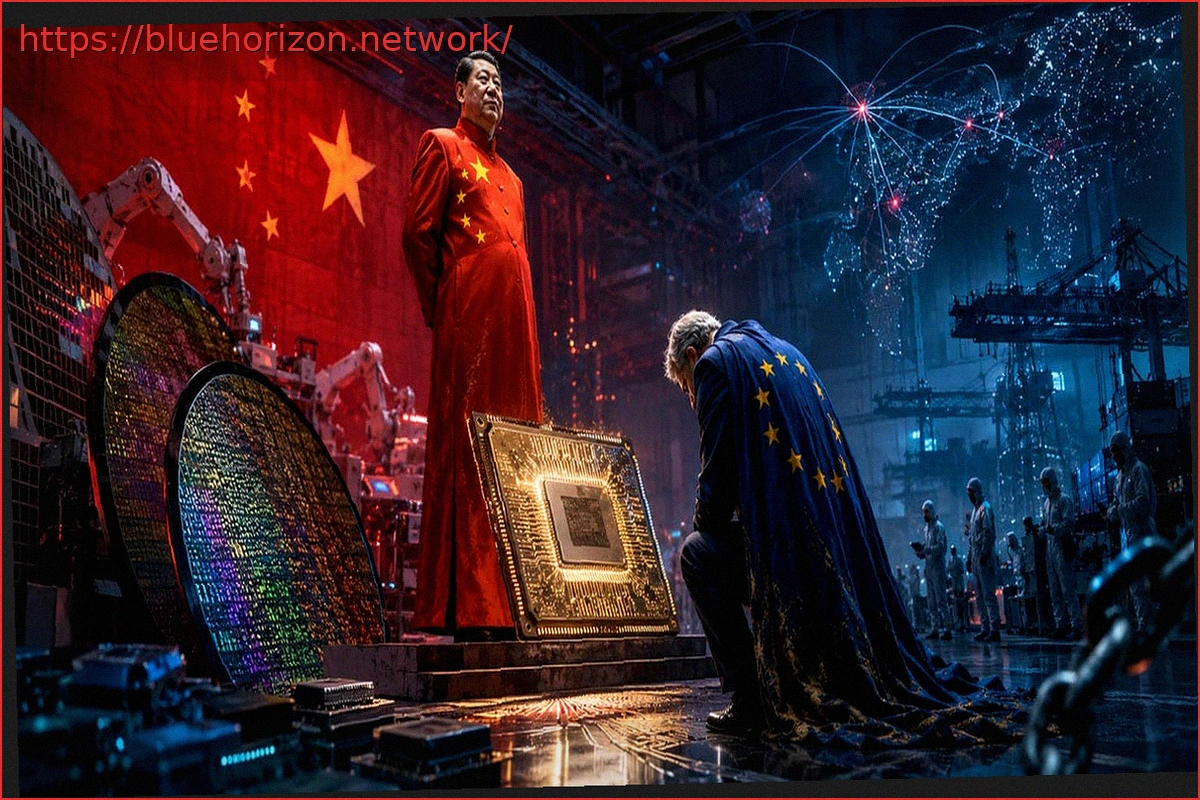
The EU’s decision to lift these sanctions is driven by pure self-interest. European car manufacturers warned that their chip inventories would be depleted within weeks, implying that the European automotive industry would collapse without this Chinese supplier. Although the exception still requires approval from the 27 EU member states, it is highly likely that the entire bloc will grant their consent. In the interim, the automotive industry is being encouraged to find alternative suppliers to prevent an abrupt halt in factory operations.
The European Union Needs to Dismantle Its Own Barriers to Save Its Automotive Industry
Yangjie specializes in power semiconductors, including rectifiers, MOSFETs, IGBTs, SiC devices, protection diodes, and other discrete components. These chips are crucial for managing current, protecting circuits, controlling power, and enabling the functionality of electronic modules in vehicles, industrial equipment, power systems, and consumer products. This is precisely why the issue is so sensitive. These are cost-effective components, not high-end CPUs or GPUs, but they are used in large volumes and are difficult to replace quickly once integrated into a production chain.
The sanction against Yangjie was part of the EU’s 20th package of sanctions against Russia, approved on April 23, 2026. The Council of the EU stated that this package aimed to target Russia’s military-industrial complex, including third-country companies accused of supplying dual-use goods or weapon-related systems. In total, the EU identified entities from China, the United Arab Emirates, Uzbekistan, Kazakhstan, and Belarus for their role in supplying critical technology to Russia.
In Yangjie’s specific case, the European Union’s accusation is serious. The EU claims the company allegedly sent over 200 shipments of dual-use technology to Russia since the invasion of Ukraine, and that the company’s products have been found in drones and ammunition used by Russian troops. This is why Brussels included it on the sanctions list. However, with the European vehicle industry now suffering the consequences of the blockade, the EU has rapidly changed its tune. It no longer matters if the company’s components appear in Russian vehicles or ammunition.
Europe’s Dependence Extends to Both Advanced Chips and Basic Components with Mature Manufacturing Processes
This situation once again highlights that Europe’s dependence is not solely linked to advanced chips. The Nexperia crisis and now the reversal of the Yangjie blockade demonstrate that bottlenecks can arise from “legacy” components: mature, discrete, power, or protection chips integrated into thousands of electronic modules. A modern car can rely on many of these components for basic functions, even if none of them are technologically groundbreaking.
The decision would also be politically awkward. On one hand, the EU wants to tighten control over Chinese companies accused of indirectly fueling the Russian military machine. On the other hand, it finds that part of its own industry depends on those very suppliers to maintain production. China, for its part, had already condemned the inclusion of Chinese companies in the European sanctions package. They argued that it damaged bilateral trust and warned of potential retaliatory measures.