
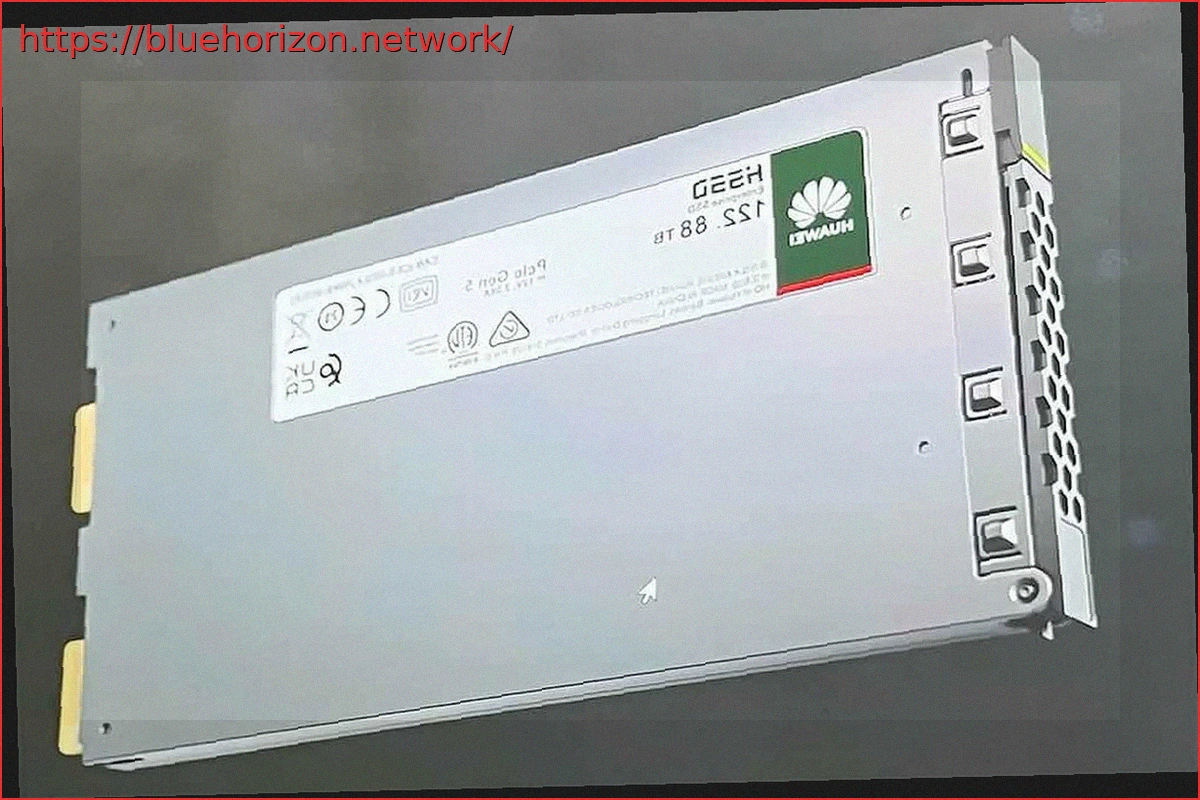
China is aiming for technological self-sufficiency, particularly from the United States. US restrictions have made it difficult for China to acquire advanced chips, hindering its technological progress. However, the US did not anticipate China’s rapid recovery, with the nation now producing competitive CPUs, GPUs, and memory chips domestically. Huawei has now introduced a remarkable 122 TB SSD that circumvents US sanctions.
The US has frequently clashed with China, often over security concerns. This has led to measures preventing Chinese companies from selling their products in the US, with last year’s tariffs significantly impacting China. In addition to these challenges, China has been unable to purchase high-performance chips for AI, including GPUs, accelerators, and advanced memory chips, for several years.
Huawei Announces 122 TB SSD Using DoB Packaging to Bypass US Restrictions
Faced with the inability to purchase chips, China had a choice: adapt and move forward or remain stagnant. It clearly chose the former, with the government and industry investing heavily in developing more capable hardware for domestic use and to re-enter the global market. China possesses the world’s largest manufacturing industry, and American restrictions have reinforced its use for domestic production and local product development. Huawei’s latest innovation, a 122 TB SSD, is surprising not only for its capacity but also for its ability to bypass US sanctions.
Specifically, the most advanced model boasts a total capacity of 122.88 TB, with a half-capacity version of 61.44 TB also available. Huawei sought to achieve high capacity while also finding a way back into Western markets by circumventing restrictions. To accomplish this, they employed Die-on-Board (DoB) packaging technology, which allows for the integration of more NAND chips. This system differs from traditional NAND packaging, as the NAND chips are placed directly onto the PCB, thereby increasing storage capacity.
Huawei Combines DoB Packaging with YMTC’s Lower-Density NAND Chips
This chip packaging technology is ideal for China’s current circumstances. Since they cannot source NAND chips from abroad, they are limited to what YMTC, the country’s primary manufacturer, offers. YMTC’s latest NAND technology is Xtacking 4.0 3D NAND with 232 layers. Huawei utilizes this lower layer density combined with DoB to achieve a capacity that rivals other brands.
In contrast, companies like Samsung have announced 3D NAND memories with over 400 layers. However, Huawei cannot acquire these, having been on the US blacklist since 2019, which completely bars them from such acquisitions.